Category: Blog Posts

SKETCH DIARY: Lady of January

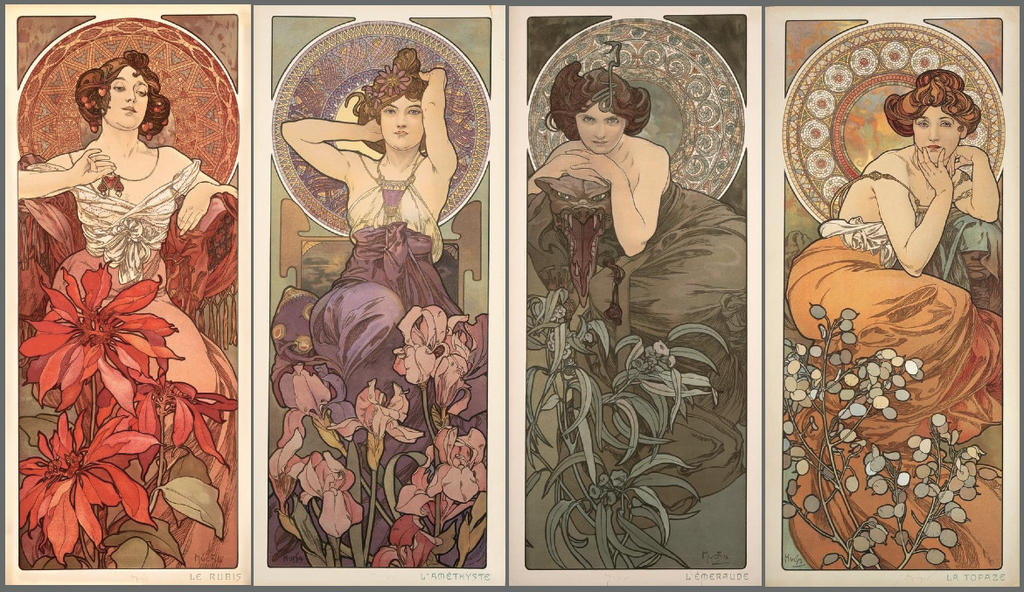
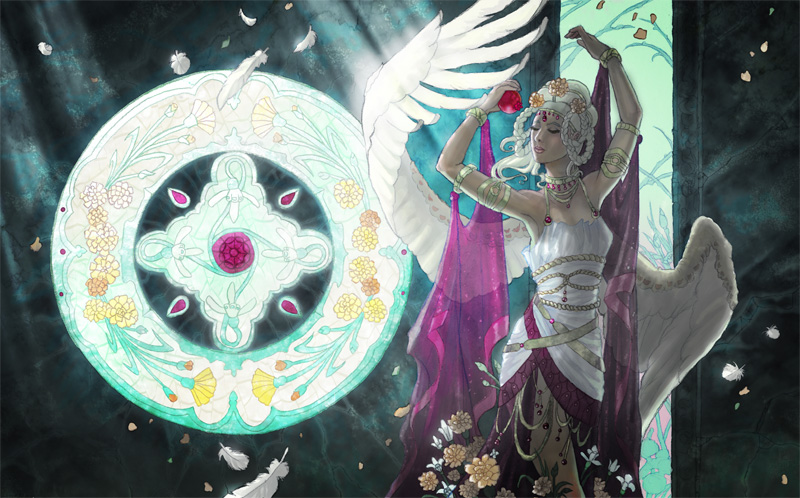
This series began as my annual Christmas card back in 2012 and as a homage to Mucha’s stunning series “The Precious Stones”!  I’m a long time fan of Alphonse Mucha ever since I discovered his work years ago in college and fell in love with his graceful, intricate compositions.  I thought it’d be fun to challenge myself to an entire series in this detailed and decorative mode of work.  The Lady of December sat alone as the only entry into this series until I recently decided to pick it up again!

The Four Gemstones by AngelaSasser

“The Precious Stones” Female figures embodying the gemstones Ruby, Amethyst, Emerald, and Topaz.

Lady of December by AngelaSasser
“Lady of December,” Digital Painting, 2012.

I had tried to do a monthly series before in the form of a series of angels, but I wasn’t quite satisfied with the layout of the composition of the first entry in this series.  The window and the figure felt disconnected, while the background seemed too empty with too much wasted potential.

Angel of January by AngelaSasser
“Lady of January,” Digital Painting, 2011.


Read more

7 Things About Digital Painting from a Traditional Artist’s Perspective

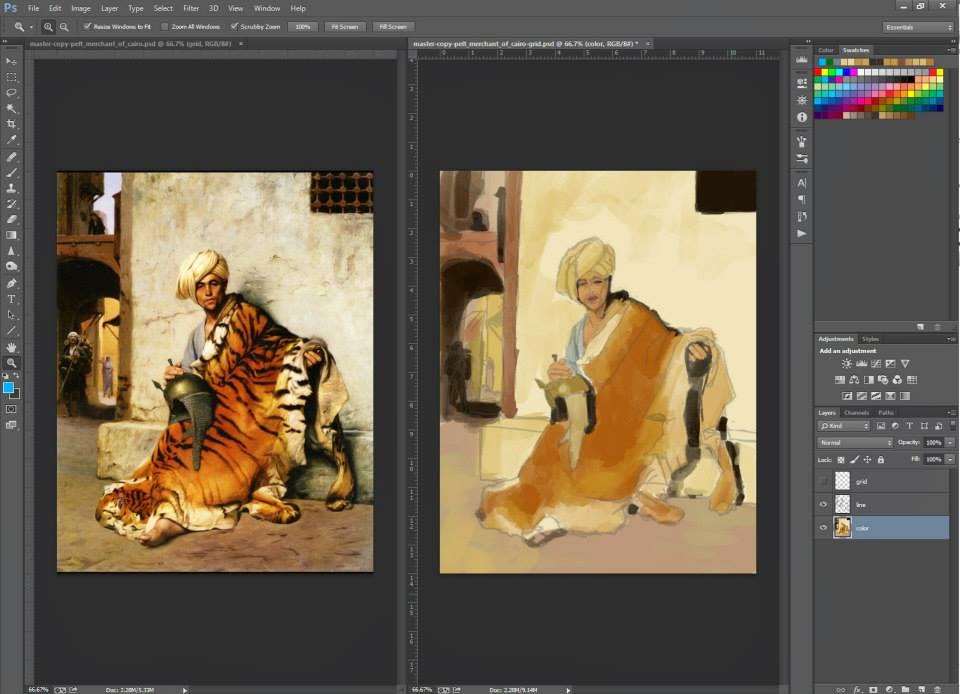
My master copy of a traditional painting with digital paint.

It’s been a frustrating and gratifying experience for me as a watercolor and color pencil artist to switch to painting digitally.  There are so many glorious things about digital just as there are so many things that can make it really difficult to master.

Here are some of my random observations on the digital painting experience as someone with a background in traditional painting.

1.  Digital is NOT Faster

No, digital is not faster.  Perhaps it is if you aren’t trying to replicate the look of traditional paint.  But in my experience, particularly when replicating a painterly look in digital, you’re going to spend a lot of time layering and layering just to get rid of the pure plastic colors that digital brushes apply by default.

There are some ways around this mechanical computer generated look, such as scanning in your own textures from traditionally painted swatches and programming them into your brushes.

Corel Painter and Photoshop have brushes you can program to emulate this randomness, but it’s not as good as the real thing just yet.  There are still too many patterns that are predictable that the eye recognizes, like computerized paper texture, which contributes to that sameness that so many digital pieces have that I mentioned earlier.

Plus, if you’re a control freak like me, you’ll spend many an hour trying to paint everything at the same level of detail until you realize that zooming out makes all that work for naught.

2.  Addiction to Layers

It is so tempting when you first start painting digitally to just have everything on multiple layers.  Why wouldn’t you?  You can control all the things ever and make everything PERFECT!  Don’t fall into the trap!  Merge your layers when you can.  For one, merging layers is easier on your computer if you don’t have a lot of processing power to spare and makes your files less humongous.

Another advantage of merging your layers is that you can retain those ‘mistakes’ that make traditional paintings have that lovely painterly feel to them.  Painting over your mistakes instead of deleting them creates a ghost or haze that makes your edges feel more organic, while merely selecting and deleting leaves a perfect edge.  Our human eyes are very keen to patterns and perfection, which can make an image seem harsh and plastic, a very common occurrence that makes many digital paintings have a certain sameness to them.

A suggestion if you’d like to change your image later is to save your selections as Channels, that way you can still retain the advantages of painting on one layer.

3.  Addiction to Undo Button 

Now that I’ve had the ability to Undo every tiny mistake, Step Backwards, Step Forewards, and change every little pixel, a weird thing has happened when I sit down with a traditional pencil and drawing pad.  I am downright afraid that I’m going to mess it up!  My ultimate power of control is gone and I’ve lost my confidence with dealing with traditional media.  If I pick the wrong color, that’s it, game over, man. GAME OVER!

It’s going to take some re-training to get my confidence back that it’s okay to make mistakes.  Digital has made me the ultimate control freak, whereas traditional media is all about letting go of that control and accepting the somewhat randomized results of how the media works, especially with something like watercolor.  For me being the control freak that I am, traditional media helps to balance my propensity for spending too long trying to make everything perfect.

4.  Mark-Making Still Matters

At least if you want to achieve a painterly quality in your digital work.  A lot of folks assume you can just drop a fill into a digital canvas and you’re done.  While you can achieve certain kinds of highly stylized effect like this, if you’re aiming for a more realistic painterly organic effect, your lines still matter.  Blending takes time and care and usually the same awareness of your marks and how you’re using them to define contour as you would have as a traditional painter.  

Also, things that might happen more naturally with traditional media, such as the pooling and blending of colors that form that wonderful randomness in your skyline take dedicated effort to achieve in digital.  In digital, randomness is carefully constructed.  You have to add the randomness to your skin pores to make that surface convincing. It doesn’t just happen thanks to the properties of your paper, glazing, and pigments.  Filters and Brushes with custom effects can help.  They get better with every version of Photoshop, but they still have a ways to go.   I haven’t used Painter much, but I hear it’s getting better at this as well.

5.  Shiny Plastic People

I don’t know why, but when I first got into digital, I assumed it’d be easier to paint skin.  There were all these nifty tools and pore brushes and amazing things that seemed to do all the work for me!

Nope.  All I got for about a year of painting people digitally was shiny plastic grey people or shiny plastic pink people.  It took master copies, many failed practice paintings trying different techniques, and brushing up on my color theory to really start bringing life to my skintones.

I still think every time I paint a person digitally that I try a different technique each time.  The more I paint digitally, the more I realize it isn’t about how you do it and any one right way, it’s about doing whatever it takes to get a good looking end result!

6.  Missing that Good Ol’ Tactile Feeling

For as amazing as digital is, I’ve found I still can’t get the same finesse with my lines, especially with inking.  Cintiqs are amazing things made of unicorn dust and the tears of artists, but you still have to rotate the canvas with Rotate View, which takes that many seconds longer than just turning your canvas in real life.  I am personally just faster at working with sketching and inking on paper, which I hope to integrate in my upcoming digital pieces.

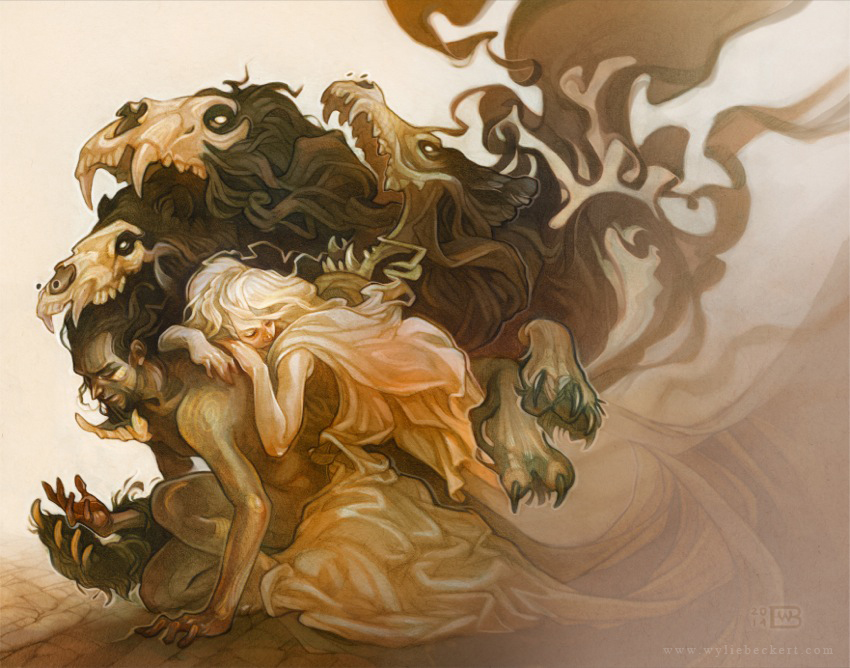
Here’s just one example of Wylie’s
amazing combination of graphite
and digital.

I used to think I shouldn’t mix media like that because I wouldn’t know how to categorize it online or that the purists would hate me (leftovers from my own snooty traditional art program brainwashing), but now I realize I just don’t care as long as I get a cool image in the end that tells the story I want to tell.

See the work of Wylie Beckert as a great example of what you can do when you free your mind to the potential of combining traditional and digital.

7. Layer Masks are Your Friends

Learn them. Love them!  I used to paint everything the hard way and then curse myself when I’ve made a mistake I can’t take back because I’ve overpainted or deleted my original layer.  Layer masks allow you to retain your original work and visually change it without having to commit to those changes.  I’m probably speaking voodoo moon language right now to those who have no clue what layer masks are.  To you, I say start here.  Learn, my grasshoppers. You will not be sorry!

And yeah sure it may lead to the ‘Undo Addiction’ I was previously talking about, but that’s okay!  As long as you have the useful potential of layer masks available to you, you might as well use it and face your Undo addiction later like I’m doing.  You’ll get over it…eventually.

So why do I keep painting digitally if it seems like it drives me crazy?

– I don’t have to keep the paintings under my bed. I am seriously out of space for storing them in our apartment (and parents’ basement).  No, I don’t want to pay for environmentally controlled storage because I am cheap/broke and that type of storage is friggin expensive.

– Being able to change an image indefinitely comes in handy!  When a traditional painting is done, I usually can’t change it much. However, if something ever bothers me about a digital piece or a client requests a change, I can most likely go back and fix it after it’s done.  This is also a double-edged sword which sometimes makes me feel like my work is never done with any particular digital piece, leading to obsessive necromancing of my older pieces.
Also, if I mess up in the middle of a piece, I don’t have to start it from scratch as I would if it were traditionally painted. I can simply alter what segment of the image I need to.
– Solvents are dangerous and I don’t want them near me. I would try oil painting if I could, which is really the effect I’m trying to achieve in digital, but there is no ventilation in this apartment. Experimenting with water-based oils and non-ventilation friendly solvents is going to take time I don’t want to commit at current (and again that storage issue).
– Because I can play with color schemes in a fun way that lends itself to discovery (IE. love me some Hue slider!)
– Digital images are great for clients who need their images easily scaled to different products and sizes without having to go through the process of having to scan/photograph a large traditionally painted piece.
– On the occasion I want to animate parts of an image, digital is SOOOooo much easier to do this with!

    For me, digital is an extremely useful and versatile tool.  While I understand why someone would find a traditional piece to have more sentimental value because an artist was able to touch it and pour their soul into every stroke, I’m the kind of artist who doesn’t paint for the process (at least on most occasions).  
    I paint for the final image and the story it tells.  
    Digital expands my vocabulary for visual storytelling in unexpected ways that I have learned to love and that have made my journey so much more efficient in many ways!

    So I ask you, purely digital artists, what are the challenges you face trying to learn traditional media?  It’d be fascinating to hear from the other side of the learning divide!

    Convention Report: SpartanCon 2014

    It’s been about a year and more since I worked a convention!  To be quite honest with you guys, I was feeling really burnt out by them.  They never seemed to be worth the physical effort and preparation put into them.  Sales were bad, morale was down, and they were absolutely no fun for me anymore.

    I wrote a post a long time ago about my thoughts on whether conventions are worthwhile and I have been thinking a lot about how I could improve my convention experience.  
    For one, (and this is huge) it helped to have a positive table partner along.  In the past, I’ve worked with a table buddy who had good intentions, but who was usually bored and focused only on the money-making aspect of the venture, which is an attitude that became quite toxic for me over time.  Unfortunately, you can’t expect to become a millionaire at a convention and doing so is the fastest way to burnout.
    My new table partner with a more positive attitude aka. my significant other, Kevin, also gave me some great tips on selling learned from his years in retail.  Nobody likes to feel like they’re being sold to.  If you can casually chat people up, learn their interests, and find something that would help improve their lives, selling is easy.  Even if they don’t have interest aligned with yours, then you still have had a good conversation!
    Positivity is key!

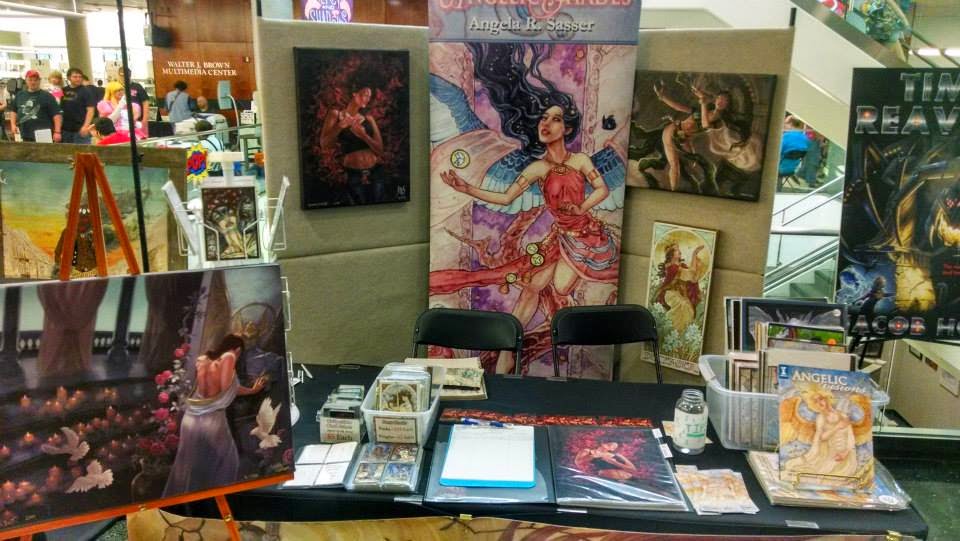
    Another area of improvement for me this con was my display.  I used to throw everything but the kitchen sink onto my table, from masks to prints, in an effort to appeal to anybody.  My display greatly lacked brand consistency, which I suspect left most folks unable to remember my specialty.  Was it masks? Art Nouveau?  Original fantasy characters?  Who could say?  There wasn’t a consistent theme across my products.
    Simplifying things helped greatly, especially when describing to customers what exactly it is I do.  It was much easier to say “I work in fantasy art and book covers” than “I work in fantasy, book covers, masks, Art Nouveau, and oh yeah I do this other thing too!”.
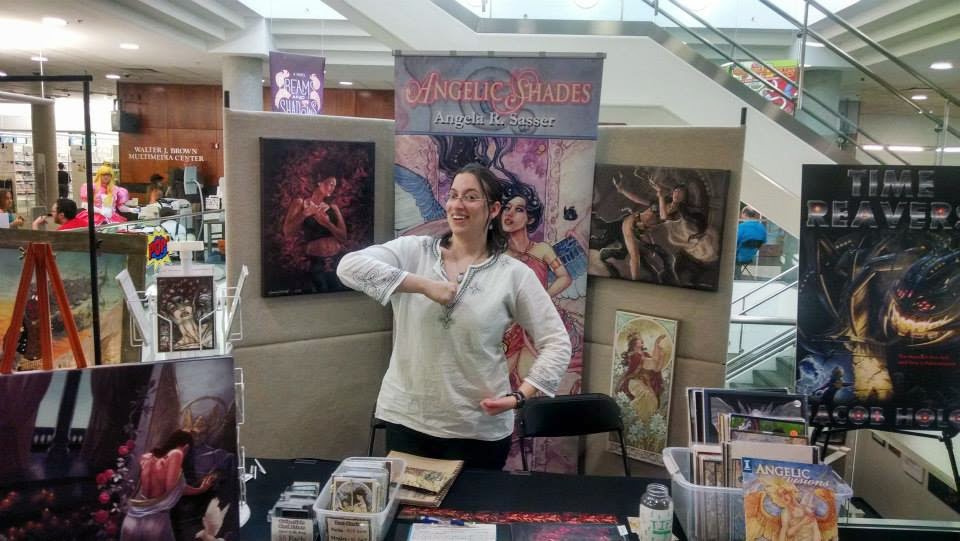
    More is less!  My new simplified display.
    As for SpartanCon, it was a great test run for me so that I could try new tactics and a new display with renewed enthusiasm!  It felt wonderful to be less concerned about money and more focused on just having a good conversation with fellow kindred spirits in geekery.  SpartanCon fills a gap within our driving distance for cons that aren’t anime-focused, as it features not just anime, but horror, sci-fi, and fantasy, which has a wider cross-section with the kind of art I do.
    Imagine our surprise when we arrived at the venue to find that SpartanCon didn’t take place at just any public library, but a beautiful three level building with a gallery and a fantastic setting of skylights and books!  The staff were all well organized and setup went very smoothly.  Foot traffic was decent the entire event and we were surprised to sell enough at this one-day, first year event to make back gas, lunch, and more.  Something that rarely happens at first year events!  

    Other Lessons Learned:

    – I tried out a tip jar, which I thought was a silly idea.  Imagine my surprise when I ended up with a $1.10 tip!  It’s not a lot, but something unexpected happened.  As a con-goer mentioned to me, they tipped me because they didn’t have a lot of money, but still wanted to support me somehow, thus they tipped what they could afford just to support me in making art.  That gesture of kindness itself was uplifting moreso than the actual tip!
    – I also tried out a new tactic for enticing con-goers to sign-up for my mailing list by hosting a giveaway for one of my books.  I came away with half a page of e-mails, so I’d say this was a success!

    Final Thoughts

    SpartanCon was a promising event that I hope to see more of!  I learned valuable lessons about how to present myself as a professional and met some wonderful enthusiastic authors and fans.  I hope the event will be returning next year.  The atmosphere is friendly and if the first year traffic is any indication, it’s only going to get better from here on out!

    Who Do I Want to Be? Maturing as an Artist

    I’ve been thinking about this topic a lot lately talking with artist friends.  We’ve known each other for years.  Many of us know each other from way back in our college days when we’d hang out in the Student Center with piles of books and art supplies and draw together for hours on end.  Since then, we’re all able to see how we have changed from the wide-eyed artists who just loved to draw whatever struck our fancies to the more mature artists struggling with what mastery of the craft truly means, or just struggling to find the time at all outside of day jobs and other life pursuits.

    I think we’ve all matured as people and as artists.  We are no longer satisfied with just drawing whatever flits through our heads.  Time is precious.  Competition, for those of us who have gone pro, means that just drawing whatever we feel like is no longer good enough to push our work to the next level.  Back in my teens, there was no pressure to sell art.  There was no pressure to compete.  It was purely art for art’s sake with little consideration for the pressure that is making a living off of art.  Back then, I had no idea how this pressure would affect my work in the future.

    These days as a more mature artist, it’s a constant struggle to not place pressure and preciousness on every little thing I draw. It can’t just be a doodle, it must be a MASTERPIECE!  If it is not, I have wasted precious time on something that neither makes me money nor advances my skills in a larger way so that I can compete with the people in the industries I’m aiming for.  I talked about the fallacy of this attitude in my last post (Stuck in ‘The Gap’) and I know this is the wrong attitude to have.  Still, funny how that happens eh?  I think it happens or has happened to everyone I know trying to make a living at art.

    Another thing I’ve noticed is that I am much more concerned now with style than I ever was in the past.  By style, I’m not talking about a specific visual style, ie. that Quirky Thing that Angela Does that makes someone recognize my work.  Rather, I’m talking about a philosophy of art.  What do I want my work to communicate?  How do I want it to communicate these thoughts, feelings, and moods to my viewer?

    Style, to me, is more about what I want my viewers to feel when they look at my work, more so than finding a ‘trick’ that makes my work unique.  A huge positive of having this perspective later in my development as an artist is that I can now focus my work on a more deep and symbolic level than I ever could as the young, scatterbrained artist who loved to draw anything and everything just because I could.

    Speaking of scatterbrained, I remember also how we all loved to learn and do so much, especially in school and didn’t have a sense of how quickly time gets sucked into a vacuum of Adulthood and Responsibilities (and doing laundry, never-ending laundry!).  I wanted to be a comic book artist, a book cover artist, a novel writer, a fine artist, a mask-maker, an editor, an art consultant, video game writer, and a concept artist (I’d still like to do so many of these things!).  Greg Manchess’ post on finding one’s audience really struck home for me.  I need to pick one or two of these things and focus on getting good at them, then expand after I’ve gotten sufficiently badass at those two sets of skills.  I realize also that’s not going to take a year, but years of my life.  I have accepted this fate.  Realizing a chunk of your life will be consumed by getting good at something is one heck of a stabilizer in this industry.

    Go figure, I ended up choosing book cover artist and mask-maker as my two fields, in the end.  The latter was quite a surprise!  Leather mask-making came out of the blue as a talent I discovered for fun that quickly expanded into an income and side business.  Life has a sense of humor like that, I’ve noticed.  Maybe it was in the blood? (My father was a leather crafter in his younger days).

    How I wish sometimes that I’d had a clearer focus on the one or two fields when I was young, but then perhaps I would not have learned the varied skills that I have now?  Jack of all trades, master of none, as they say.  But at least I now know what SEO means, how to use an Oxford comma, and how to mold cow skin into something beautiful.  Surely, this means I can get into a trivia show at some point in my life?

    Anyways, back to the present!  Now, I seem to have found a sense of myself and my ‘style’.  I have felt the first concrete thoughts about what I want my work to be like settling into the mold of the artist I want to be.  I want my work to be like James Jean’s, to capture that sense of a dreamlike reality without verging into the Surreal.  I want to tap the heart of fairy tales like he has with his work on Fables in a bold, mature way.

    I want to bring narrative and emotional atmosphere to my work, like Waterhouse did with his paintings.  I want to condense the aesthetic beauty and semi-realism of Mucha and Rossetti into something wholly new.

    But I still want to be me.  I want to be more than the sum of my inspirational parts, so to speak.

    And I agree with Greg’s assessment that the only way we can define ourselves, at first, is to emulate those that we admire until we realize what makes our artistic voice different from those influences.  We only find that voice with time, study, patience, and creating a whole lot of work to weed out what feels right and what doesn’t.  To mature as people and artists is the only way these things can happen.

    The time has never been better than now to really push my work and see what I can create as the artist I am now, an artist honed from those years of exploration into a keen observer of what I like and don’t like, what I want to be and don’t want to be.

    There’s something coming with my work.  I can just feel that bud of potential ready to blossom, if only I continue to nurture it!  I’m so excited to see what happens next and that makes me extremely happy!

    Thanks for sticking with me through all my ramblings, dear readers!  I’ve been introspective of late in these entries, but perhaps they will help someone out there?  They certainly help me.  I can see the stepping stones on my mountain of Mastery becoming clearer the more I have these kinds of conversations with myself and with you all.

    Here’s to the exuberance of youth and the discerning wisdom of maturity!  Two essential ingredients to being the people that we want to be.

    Stuck in “The Gap”

    DragonCon jury time is upon us and it’s around this time of year where I have that yearly freak out about whether I have enough new stuff, why I’m not producing more, the paralyzing fear of rejection and inevitable downfall into self-loathing, etc.  I want all the masterpieces I’ve been attempting to be done now!  I want all of the studies I’ve been doing to pay off now!

    I know the most logical, sensible advice is “Just wait. Everything comes in time after due diligence.”

    But I’ve honestly just been impatient and anxious this past month. I don’t want to wait for that magical moment where it all just clicks together and makes sense!  I want it all, and I want it now!

    My portfolio reviewers keep telling me that my stuff is “Good…but…”.  There is always the ‘but’.  My current development as an artist is that I am just one small hop between being good and being great.  My portfolio reviewers also echo the same impression of my work.  There’s just the slightest gap between my story-telling abilities and just the slightest bit of funkiness to my anatomy.

    In fact, I feel I am in the very definition of “The Gap”, as Ira Glass calls it.
    I know this quote is geared towards writers, but it’s applicable to artists just as well.

    I wholeheartedly recognize this and I’ve been asking myself some tough questions of late:

    Q:  Am I producing enough work to improve in a timely manner?

    A:  No.  I need to be producing way more, at least one fully fleshed out painting a month is my goal and I haven’t met that.

    Q:  Am I studying enough?

    A:  No.  I want to warm up every day with studies, but I’ve only managed to do studies every other day or so.  I hate that feeling that I have nothing to show people that’s polished, other than my notebook scribbles. Makes me feel unproductive!

    Q:  Moreover, am I studying the right things instead of drawing the same thing wrong over and over?  

    A: For once, I feel like this is the only thing I have managed to get right, lately!  It took me a long time to find teachers whose methods made sense to me, particularly where anatomy is concerned.

    I found Bridgman’s methods to be more scientific while Hampton and Proko‘s emphasis on emotion and mannequenization make more sense to the way I learn things.  Chris Oatley’s Painting Drama course has also opened my eyes about narrative considerations in composition far more than any Art History course I’ve taken has.  Finding a teacher who speaks your learning language is so important!  What works for one person may not work for another.

    I tend to agree with what Jon Schindehette described in his Intention of Mastery post.  If you’re practicing something wrong over and over again, you’re only going to learn the wrong way to do things.  Going beyond this, if I can have a specific goal in mind before I pick up the pencil, rather than just mechanically drawing more, I will learn more and be more inspired!

    I feel like I will only be out of this ‘gap’ when I reach the point that Jon mentions.

    At some point, the pencil will stop being a mechanical device that I use to make marks on paper, and will start to become the extension of myself that expresses itself on paper through marks.

    I am realizing that my expectation of a ‘magic moment’ of understanding is also a false and debilitating one. There isn’t going to be one click, but many small clicks over time.  I also have to realize that knowledge is impermanent.  My mind is not a computer and can only retain things if I am actively studying them and refreshing my knowledge.  Anatomy, lighting, narrative, value, etc. etc. There’s just too much information for my mind to retain everything without losing others!

    But I’ve clung to that notion that there will be that Big Moment of realization and suddenly my paintings are better and that’s just not how this works.

    I may not have too many answers by the end of this entry, but I am hopeful that at least I’m asking myself the right questions!  How about you guys?  Are you stuck in ‘The Gap’ with me?  What are the questions (and answers) you’re struggling with?

    New Patreon Intro Videos

    This week I was finally able to complete swanky intro videos made for both of my Patreon pages! You guys should check them out and tell me what you think. You’ll get to learn much of the following:

    – The specific artist who made me want to be an illustrator.
    – Why I wanted to be a mask maker.
    – What kind of art I was drawing involving masks back when I was a teen.
    – What my masks looked like before I discovered leather. It ain’t pretty!

    Plus other odds and ends. Enjoy the trip down memory lane! 

    Now, I can get back to actually *making* art, for as fun as all this video editing has been. So many outtakes…so…many…

    The intro for my Art and Illustration page:

    The intro for my Artisan Crafts page:

    Critiques, Portfolio Reviews, and Consultations for Artists

    This week I tentatively rolled out a section on my website for Creative Consulting.

    What means this ‘consulting’?  Well, some of you might remember my Portfolio Reviews and Critique Corner articles here on this blog where I was able to provide direct feedback and helpful resources to artists wishing to improve their work.

    Sadly, these sections of my blog have faded away after I realized I just don’t have the time anymore to do them.  I’ve been increasingly busy dedicating myself to my own portfolio work as well as nurturing commission work on a grander scale than I ever have before.

    However, I really, really hate to see these columns go and I stand behind the way this kind of direct interaction and critique can help other artists in a profound way.  As such, I am still offering portfolio reviews and critiques for modest fees, which you can view the rates here.  If you have a surplus of deviantART points, I also take payment in points for the red lines and paint overs here.

    This is a way for you to work with me directly without having to catch me in-person at a convention.  We also won’t have to worry about your subject matter, which I would previously have had to censor if it was going to be featured on this blog, which I try to keep Safe for Work.

    An example of a paint over and critique featuring the art of Kim Ravenfire.
    You can read the full critique here.
    An example of a red line featuring the art of Judith Mayr.
    You can read the full critique here.

    For more examples of my critiques, read on here.

    I still plan to participate in critiques online in places like the GoldenCritique-Club on dA and WiPnation, but I will only be able to do so when my schedule, interest, and projects allow.

    In addition to paint overs and portfolio reviews, I am also tentatively offering online art marketing consultations.  I’ve always wanted to do this, but felt I could not until I was at a point in my career where the methods I have studied and experimented with have yielded tangible results so that I can be confidant and justified when advising other artists.

    E-marketing and its potential for artists is a passion of mine which I have studied professionally in the Arts Administration program at The Savannah College of Art and Design.  There, I earned my MA after the completion of my thesis focusing on the evolution of audiences and patrons via the expansion of the internet and its social venues.

    I’m excited to finally be able to apply what I have learned on a grander scale! I have previously only provided advice via panels at conventions, blog posts at this journal, and private interactions with artists I know seeking advice on expanding their business.

    These sessions are meant specifically for individual artists and will focus on their current e-marketing strategies, filling the gaps of their e-marketing knowledge, and discussing which online venues might work best when considering their work.

    For those who are new to my work and don’t know my history in being able to critique art or speak on the topic of e-marketing for artists, you can also read about my credentials and experience with these subjects on the Creative Consulting page.

    I’m excited to foster this new way of connecting and helping other artists!  I look forward to what amazing work you guys might send my way and the trust you might place in me in helping to improve your future work.

    Wishing you all inspiration!

    Adventures in Video Editing. Feedback Requested!

    I’ve been iced in for three days straight here in Georgia so I used this accumulation of time inside to start teaching myself video editing with Camtasia Studio 8.  I’ve finally figured out how to use my mic as well, which means my videos now come with film noir voice-over narration!

    Well maybe not film noir, persay, but the potential is there!

    I hope you’ll watch and give me some feedback about how you like it! With luck, I’ll be doing many more of them to share.  It’s quite fun to be able to yack at you guys directly.  I always do it via walls of text here in blog posts.  It’s nice to put a voice to the text!

    On that note, here are some questions for you:

    1. What kind of videos would you like to see more of?
    2. What kinds of things should I talk about during videos?
    3. If I started hosting live monthly Q&A/AMA sessions, would anyone be interested in attending?

    I’d appreciate any kind of feedback you guys can give me on this matter!  I’ve already got a couple of videos up with narration, one on the making of a leather crafted barrette and the other of a walkthrough of a master copy of Gerome’s art.

    I admit a lot of my current push to learn video editing is so I can start being more interactive on the net on my YouTube channel, but also on a little site called Patreon that’s causing a lot of buzz right now.

    More on that later!  It’s been a time of re-structuring myself, re-focusing my career goals, and bringing even more of a polish of the vision I have for my art.

    Some exciting things are a-brewing this year.  Stay tuned for more, Bat-fans!

    Staying Informed in the Art Profession

    A conversation with a fellow artist spurred me towards writing about this topic.  This particular friend was curious about entering a new field in art, in her case, concept art for video games.  She was really curious about it, but the idea of absorbing so much of the unknown concerning this entirely new field was stressful for her!

    I can definitely relate!  I felt much the same way when I was first considering concept art as a career path before I went to college and again when I thought I might pick it up again as a career a couple of years ago.  I eventually turned back to illustration for a multitude of reasons (ie. not being able to relocate, not wanting to divide focus, etc.), but changing fields is something constantly on my mind.  As such, I always try to stay informed for my own personal career goals and because regardless of whether I will work in concept art or not, video game design and concept art remains something I highly enjoy.

    So the question remains – How do you inform yourself before you enter a field and how do you STAY informed, once you work within that field?

    Talk to Working Artists

    For me, the learning process began by first talking to an artist I know who actually works in the business.  Talking to a working artist is the fastest way to separate the glamorous impression of the job from the realism of the job.  Concept artists, for example, face everything from difficult clients, corporate bureaucracy, long hours, low pay, and extremely high competition, to a lack of a guarantee that their project might even see the light of day, in some cases.

    I’ve found my fellow artists to be some of the most friendly and pragmatic people I’ve ever met.  Most artists want to see other artists succeed, so never be afraid to ask!  They can also oftentimes provide you the honest feedback you need about your work that family members and friends might be too nice or simply uninformed to give you.

    The Outside World

    While the internet is great, sometimes escaping that warm fluorescent glow can provide you with more accurate and up to date information than the online world.  For instance, as an illustrator, I like to keep up with trends in book cover designs by going to the bookstore’s Fantasy and Sci-fi section and scoping out the competition. I take note of trends in art styles, popular subject matter, and the names of the publishing houses who publish books with covers that seem similar to my own design sensibilities.  My hope is that when I’m ready to market my book cover portfolio, I’ll have some viable targets to contact, rather than having a portfolio with no idea of where to send it.

    The same can be said of concept artists for video games.  Go to game stores. See what the bestsellers are. See what new games are coming out.  Check out the trends and who is working with the kind of style and characters you particularly enjoy.  Chances are the developer of that game has a particular design sensibility that you would fit in with at some point.

    Online Communities and Groups

    With the internet at our fingertips, you can find so much information at online groups like CGhub, CGsociety, and ConceptArt.org.  Many of these sites have previously published articles about everyday practices in the industry that are invaluable primers for artists at an entry level.  ConceptArt.org and CGhub are especially useful places in that they cater to both digital and traditional artists, unlike CGsociety, which generally caters to digital artists.  All three of these sites have job listing areas, which is icing on the cake!  Another perk of all of these sites is that all of them host art challenges where you can get experience creating a piece of art, which can be handy if you’re not sure what to put in your portfolio.

    Blogs

    There are three blogs that I frequent moreso than others because they provide information relevant to me as a Sci-Fi/Fantasy and freelance artist.  They are:
    Muddy Colors – A blog ran by a collective of some of the top artists in the fields of concept art, illustration, and sculpture.  They share everything from business practices to technique tutorials from tried and true professionals.
    The ArtOrder – A blog ran by Art Director, Jon Schindehette.  Jon is an invaluable resource not only for having an AD’s perspective on portfolio building and professionalism, but he also has a passion for inspiring other artists.  He hosts frequent art challenges with prizes that are highly worth participating in for your own skill building and for the exposure your work might receive from his well chosen challenge judges.
    SurLaLune Fairytales – This blog is maintained by Heidi Anne Heiner, an expert on fairy tale studies who has her finger on the pulse of fairy tales in past and modern culture.  She posts very often with the latest news about modern revisionist fairy tale movies, books, etc. and about her own compilation books of fairy tale motifs.  Definitely a must-read for you fairy tale illustrators out there!

    (EDIT can’t believe I forgot this one!) Chrisoatley.com – How could I forget to mention Chris Oatley’s blog? Chris Oatley is a character designer and the spearhead behind the Oatley Academy, where I am a student of Painting Drama. His blog posts and Artcast cut right to the heart of my concerns as a freelance artist and tend to inspire me when I need the boost most. It’s a new one on my frequent reading list, but an invaluable one!

    Magazines

    It hurts having to pay subscriptions, but I consider my subscription to ImagineFX an invaluable connection to the Sci-fi/Fantasy and concept art industry.  While the tutorials and free Photoshop brushes are hit or miss sometimes, the real value to me as a working artist are the reviews on current technology and art books.  Reading these reviews helps me make better decisions about my purchases so I can spend my budget wisely.  
    I also enjoy their profiles of accomplished working artists which gives me a valuable glimpse into where these artists came from as people and how they are succeeding in the industry.  Reading about their journeys inspires me to continue walking my own and that kind of motivation is priceless! They also host contests, post articles about new online art projects and communities, and gather other odds and ends of information that help inform me as an artist.
    This list could go on and on, but I’m going to stop here!  Long story short, the best way to keep up, in my opinion, is to know who the working artists are in your field, know the companies that are active and hiring, and never live in a void.  Staying informed goes hand in hand with staying inspired!

    What are some of your favorite places to keep up with your field of art?  Share in comments!

    Sketch Diary – Winter Light – Christmas Card 2013 – Part 2

    After gathering references, taking photos for anatomy reference, and composing the pencil draft, I took the scanned image into Photoshop where I arranged the image digitally and composed background elements.  
    I wanted to be sure that she was a part of her background and not merely a pretty lady pasted on top of it, so I purposefully arranged some of the branches to overlap her in space.  This was also important for maintaining the theme of ‘protection of the light’ from winter’s darkness, as the branches encircling the figure from the foreground and the background give it that sense of an encroaching forest trapped in winter with their physical arrangement.
    In the past, I have always inked with black ink, but it occurred to me I could push the theme of cold vs. warm in this by doing the same with the inks.  I used Micron indigo color ink for the background and sepia color for the figure to help the warmth of her figure move forward while the cool background hues and lines recede.
    The effect of using color inks popped the figure, as I hoped it would!  Black inks have a way of flattening the image and decreasing the illusion of value in certain shapes.  Note to self: use this technique more!
    Other tips and tricks.  I admit to using white gel pen to pop the whites in the tips of her icy branch necklace and circlet, the highlights on her face, and the candle’s flame.  I did use masking fluid to preserve my paper white in specific areas, but sometimes the shapes are not clean after peeling the masking fluid off and that is where white gel pen can save the day!
    You may also notice a vast difference between the color test and the final image.  Why is that?  
    Sometimes when you’re painting, you make snap decisions to change course which can lead to good or ill.  In this case, it occurred to me that the yellow in the color test just wasn’t popping enough against the cool green.  The image felt too muted.  By the time I had finished applying the first layers of the Indigo background, I decided to give it a more purple sunset, which gave the image a complementary palette of Purple/Yellow, which helps pop the flame and warmth in the figure moreso than the color test.

    I would have liked to achieve the greater value shifts shown in the color test, but my board was saturated with color and would not allow me to add more layers.  You can see where this happened particularly in the shadows of the dress where the colors start to look as if they’re unevenly separated instead of uniformly painted.  The board just would not accept more pigment!

    Perhaps there is a shift to watercolor paper in my future?  I’ve had better luck with tons and tons of layers on Arches paper.

    Finally, here’s an animated GIF of this painting’s progress!
    If you can’t see the GIF, you can watch the video here: