On the last “Confessions” post, we talked about the merits and downfalls of tracing. Many of you revealed that I am not the only one to start out in art with early tracing books. It was also interesting to hear about how I am not the only one to suffer Dragonball and Sailor Moon anime influenced phases. I do wonder sometimes what the next influential phase of infectious art styles will be for the future generations of artists? Perhaps Avatar: The Last Airbender, Naruto, or Inuyasha styles?
This week I’d like to make yet another confession.
I have only in recent years learned that piling artwork under my bed is not the best practice for storing original art. Even worse, there was a point during my high school days where I was storing art with….cardboard and plastic wrap. Yes, the plastic wrap from your kitchen. (Don’t try this at home, kiddies!)
Oh sure, it is easy when we start out to believe that art is just for fun, so why not toss it under the bed or on the next most convenient pile on your desk? It will be fine until we dig it out again, right? Eventually, we graduate to stuffing them in trapper keepers and accrue piles of shiny notebooks, folders, and trapper keepers with papers sticking out of them. Things like pH balance don’t exist for us when we’re young and naive and, like our art, we view ourselves as immortal. The art will always be there when we need it.
I learned my lesson the hard way when I went to dig out old work, seeking something to display for a student show, and found that most of my work was yellow, stained with cat puke, or torn and ripped at the corners. Lesson being, don’t store your art under your bed if you can help it. So, I’m here to implore you to please, as early as possible, form good storage habits for art if it really means something to you.
Some basic things to remember for storing your art properly:
- Paper, especially newsprint, is prone to yellowing. Store it out of the sun where possible. Use higher quality thicker paper like Bristol board or illustration board when you can instead of cheap drawing paper from drawing pads which is easier to damage. Drawing pads are great for practice sketches, but higher quality paper will make your masterpieces last longer.
- Masking tape, scotch tape, and certain types of mat board contain acid, which can cause staining and yellowing. General rule of thumb: If it’s physically touching your artwork, it needs to be acid free (archival)!
- Cardboard is NOT archival unless you special order archival backing board or cut your own backing from acid free board.
- Certain media such as pastel, charcoal, and color pencil need to be sprayed with fixative to preserve their color and to insure that they do not rub off. Acrylics do not need to be sprayed, though they will benefit from being sealed with a protective layer of varnish. Oils, on the other hand, require a layer of varnish to set the colors.
Some simple storage solutions for your art:
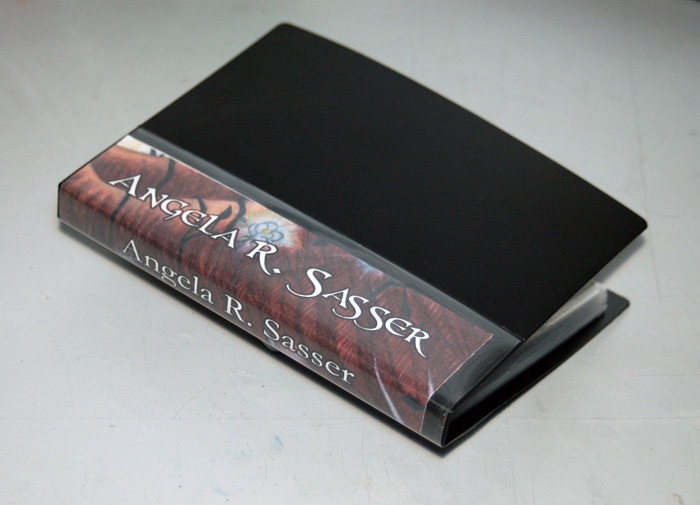
- Storage & Display Portfolios – Buy storage portfolios instead of trapper keepers. I recommend Itoya portfolios. They are fairly affordable and come in multiple sizes to suit all needs. Their pages and mounting paper are archival/acid free and the portfolios look tons more professional than your shiny hot pink Lisa Frank trapper keeper. You can also customize the spine to show your name by sliding the paper out and replacing it with your own like this.
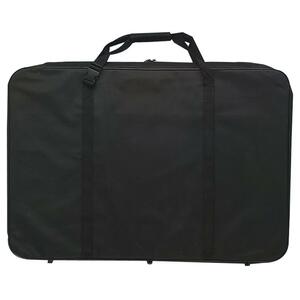
- Carrying Cases & Large Portfolios – Storing larger work over 14×17 inches can be problematic. If you can store them in a carrying case portfolio or keep them in their original art pad binders, that is better than piling large work loose somewhere where they are easy to damage. Another alternative is to properly mat and frame the large work and hang it up on the wall
- Plastic Bins & Paper Copy Boxes – Storing larger framed work can be tricky. If you can’t put it on the wall, it is best to store frames upright in copy paper boxes or large plastic bins with protective styrofoam sheets or cardboard in-between. If you stack your frames with protective sheets between, just don’t stack them too high or the weight could damage the frames on the bottom. For additional protection, you may want to wrap each frame individually with bubble wrap. Most times, you can go to large stores like Sam’s, or other department stores, and get handy cardboard bins or paper copy boxes for free or low cost.
- Plastic Storage Drawers – For storing smaller framed works and stacks of portfolios, you might want to invest in good plastic storage shelves. I prefer shelves which have closed walls as this helps to keep dust from gathering on your work. Be warned! Don’t skimp on buying good plastic shelves, as the cheap ones will bow and are only useful for storing very light objects. A general indicator of a good quality plastic storage unit is that the plastic is opaque instead of clear.


Just about all of my supplies and materials are kept in the opaque plastic shelves on the bottom with lightweight portfolios, mailing envelopes, and small originals kept in the crappy clear drawers sitting on top of the ‘nice’ plastic shelf. I still have art piled under my bed, but it’s generally the stuff which I don’t mind being damaged or it is still snuggly attached in its original art pad.
I have tons of copy boxes and over the shoulder carrying case portfolios in my room and basement which store framed art, scraps, large art, and other supplies. My setup isn’t perfect yet, as my large canvas work still sits relatively unprotected and leaning against a wall, but it’s a start!
My final word of advice is to start storing your stuff properly as early as possible. You don’t want a possible masterpiece to be ruined by carelessness and trust me that cat puke is the most horrible permanent yellow you will ever see.
Those of you who are already practicing good habits, how do you store your art? Do you have anything to add to this list of suggestions? Feel free to share photos of your storage space!